Saint-Séverin: Six Centuries in Old Paris
- amydene22
- Feb 17
- 3 min read
Updated: Apr 21
Tucked away in the Latin Quarter of old Paris is a medieval church that has stood watch over its neighborhood for hundreds of years. From the outside, the Church of Saint-Severin looks every bit its age, its façade streaked with black marks of soot and air pollution that have settled into the stone over centuries. But to step inside is to enter a stunning atmosphere of artistry and wonder, with colorful stained-glass windows and carved columns that look like ribbons. Walking through its heavy wooden doors, I found a peaceful respite amid the bustle of the crowded Latin Quarter.

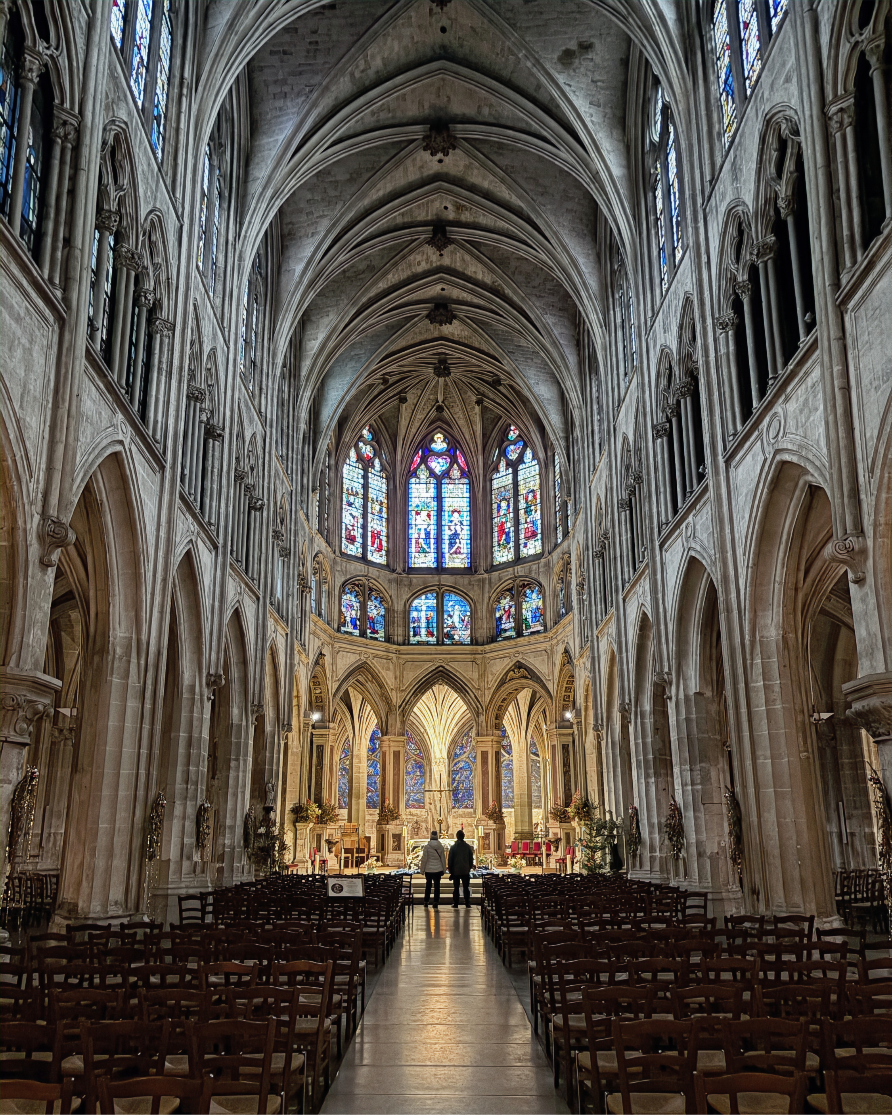
One of the oldest churches on Paris’s Left Bank, construction on Saint-Severin began in 1230. It was rebuilt after a fire devoured it in 1448 during the Hundred Years’ War. The structure as it stands today was built—and later enhanced—in the 15th and 17th centuries in the Flamboyant Gothic style. A series of Flamboyant columns and dramatic arches were added, forming a circle of chapels around the heart of the church, creating the impressive architecture we see today.

I had already chosen this church as a setting for my novel based on its location in the 5th Arrondissement, and seeing photos online confirmed it was what I was looking for. But witnessing it in person is what sealed the deal. The website images had been beautiful, but none of them captured the church's true magnificence or the feeling it inspired—the calm, the weight of history, the stunning beauty. This was exactly the atmosphere I wanted for the church that will serve as a contrasting backdrop to a powerful scene in my novel.

Some places feel like the story itself chose them rather than the author, and Saint-Séverin is one of them. Its age, its beauty, and the sense of tranquility it offers within the busy Latin Quarter, give it a feeling of belonging, not only in the story, but in the neighborhood it has watched over for centuries. It’s the place where the characters in my novel gathered every Sunday for mass as they came of age in old Paris. The church served as an important backdrop to their lives, hosting baptisms, confirmations, holidays and weddings—moments with family that crossed generations.

When the First World War broke out, so much in Paris changed. So much was lost. Shops closed. Men left for the front. Daily life was suddenly transformed from joie de vivre to uncertainty and fear. Yet Saint-Séverin would have remained one of the few constants. A beacon of hope. A place to pray. For my characters, the comfort and continuity it offered felt like a lifeline as they waited to hear news of their loved ones.
All of this settled over me as I sat quietly in the church. The centuries of history were present in its walls—the many lives that have passed through, the prayers whispered, the love, and the tears. Its places like this that inspire me to tell stories of the people who lived in another time.
Do you enjoy behind-the-scenes looks at the writing process? Subscribe to the blog for more posts like this, and follow along on Instagram @traveling_author_amy as I share updates from my journey.


Comments