


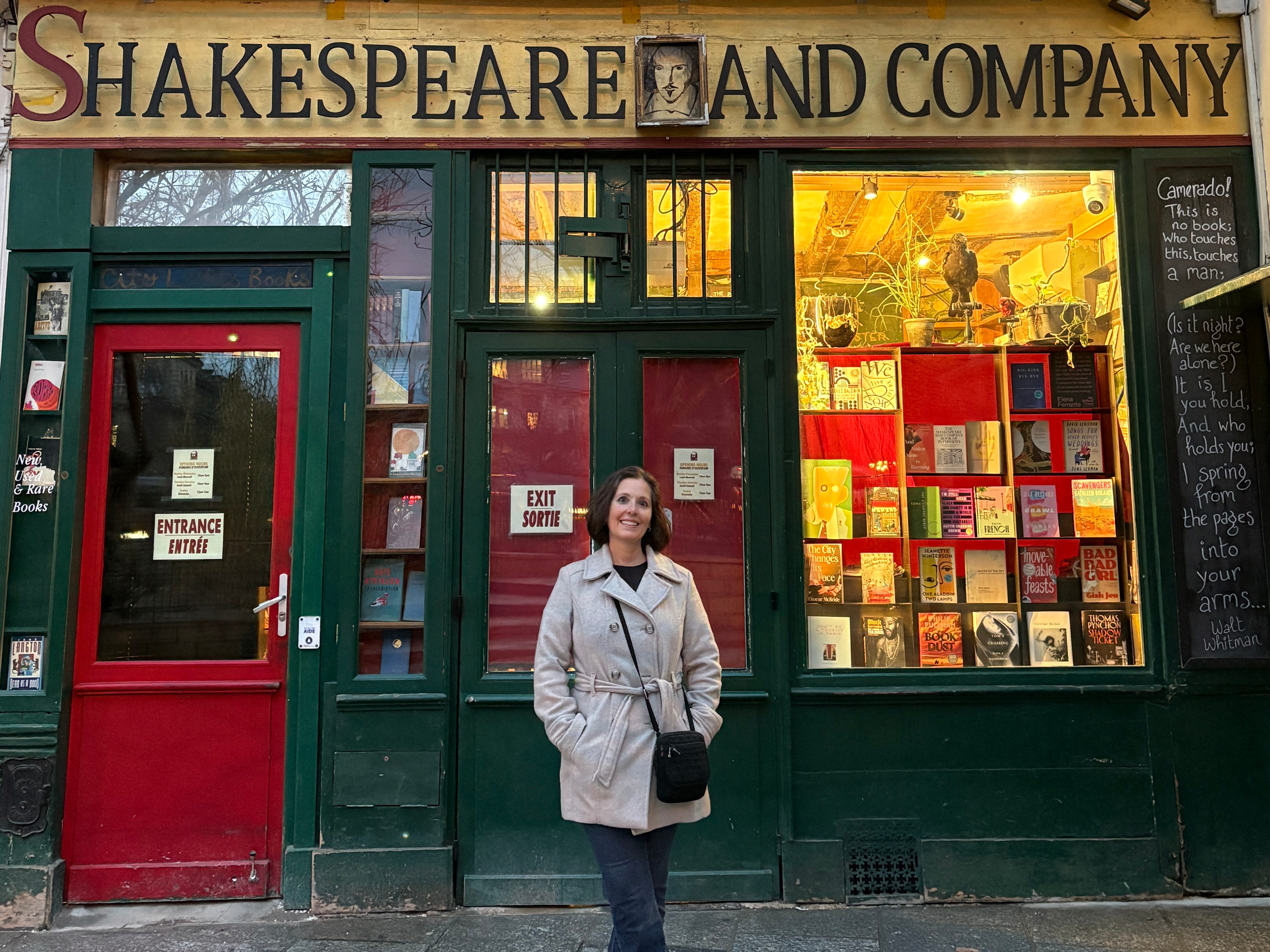
It took me a long time to find my calling—over half my life, in fact. For years I was genuinely happy in my work and never gave the concept of a calling much thought. Then life threw me a curveball. The travel business I’d spent a decade building was all but decimated in weeks when a global pandemic brought travel to a standstill. After years of cancelled commissions, financial uncertainty, and sleepless nights, I found myself in a soul-crushing corporate job, going through the motions, and wondering if that was the end of the joy I once felt in my work.
It wasn’t. And now I write to help others find what I eventually found for myself.
The following is an excerpt from, You Don’t Have to Stay—part memoir, part guide about leaving a draining job for a career that lights you up. This comes from Chapter 5: Discovering Your Calling.
For eleven years, I woke up excited to go to work. I planned dream vacations for families, sent honeymooners to Hawaii, and spent my days talking about places most people only fantasized about. I lived what many people would call a dream life, running my own business, seeing the world, and doing what I loved. That work wasn’t just a job; it was an expression of who I was. It gave me freedom, purpose, and a sense of pride in what I’d created.
When that chapter ended, I returned to corporate as a temporary place to land while I figured out what came next. Over the years, I tried a few side paths—selling on eBay, direct sales, even day trading—in search of the meaning I once had.
Nothing was clicking—except travel, the one remaining spark in my life. I was grateful that my job afforded me generous vacation time and the funds to keep exploring, even if it was a far cry from the freedom I’d enjoyed as a travel advisor. Traveling became the only time I still felt like myself.
After crying on the plane back from Paris, despite being at my breaking point, I still didn’t leave my job. Instead, I started writing. I remembered a transatlantic cruise I’d taken the year before that inspired a story, and I began researching that idea. That search led me to a storyline inspired by a real historical figure that lit me up in a way I hadn’t felt in years.
I began working on a novel set largely in Paris. Every night after work, I found myself looking forward to my evening writing time. The hours that previously felt draining suddenly became sacred. I would sit down exhausted and stand up energized with a sense of accomplishment I hadn’t felt in years.
The more I wrote, the harder it became to pretend that my corporate job was enough for me. The difference was unmistakable. Writing didn’t just feel good; it felt like coming home to myself. Slowly but undeniably, I realized this wasn’t a hobby. This was my calling.
Writing stood out in a way nothing else did. I would sit down after work feeling exhausted, convinced I had very little to give, only to stand up hours later completely absorbed in the world I was creating. That kind of engagement was a stark contrast to my day job, where the minutes ticked by like a wounded turtle.
Once I found genuine joy in my writing, I thought my job would get easier. I thought that if my evenings were fulfilling, my day job wouldn’t matter as much. But the opposite happened. Instead of feeling better at work, everything became harder. Every unreasonable request felt unbearable. Every negative comment cut deeper.
I’d finally found what it means to be happy in my work again. Through my writing, I felt the same joy that I once had through my travel business. And once that had returned, it became so much harder to tolerate anything less from my day job. I started to see working at that job as a form of self-betrayal. I could no longer justify draining my energy all day when happiness awaited me each evening on the hard drive of my laptop.
— End of excerpt —
They say you don’t choose a calling—it chooses you. But I think it’s more accurate to say it waits for you, quietly and patiently, while you chase other paths, settle for good enough, or convince yourself that work doesn’t have to feel meaningful. Yours might be waiting in an idea you keep coming back to, a project that energizes you when everything else drains you, or something you’ve already started but haven’t yet taken seriously. You’ll know it when you find it—not because it feels easy, but because it feels necessary. And once you do, settling for anything less is no longer an option.
If any part of this story resonates, I wrote this book for you. You Don’t Have to Stay is available on Amazon on March 3, 2026.