


It took over three years to build Titanic, a ship that sailed for only five days. Her ending is the part of the story everyone knows, but her beginning was a triumph of workmanship. In the early 1900s, Belfast, Ireland (now Northern Ireland), was one of the great industrial capitals. Its shipyards were a symbol of innovation and strength, and Harland & Wolff was the largest shipbuilder in the world. This is where Titanic was born—with ambition, skill and pride.
But her story begins in England two years before the first piece of steel was ever laid. As the legend goes, one spring evening in 1907, Lord Pirrie, the chairman of Harland & Wolff, hosted Bruce Ismay, the chairman of White Star Line, at his London mansion. The two companies had a longstanding agreement for Harland & Wolff to build all of White Star Line’s ships. The rival Cunard Line was about to introduce the Lusitania and the Mauretania, two ships that would claim the records for both size and speed across the Atlantic. White Star Line’s vessels were built for comfort rather than speed, and that night in London, the two men set in motion plans for transatlantic ocean liners that would surpass Cunard’s in size and luxury. Each would measure about 45,000 gross tons, nearly 50 percent larger than the Lusitania.
The Drawing Offices
Belfast was the first port of call on a transatlantic research cruise I took one year ago retracing Titanic’s intended route from Southampton to New York. My morning in port began with breakfast at the Titanic Hotel, which occupies the former headquarters of Harland & Wolff. After tasty European pastries and a cappuccino, I did a little exploring, and found myself standing in the very place where Titanic and Olympic were conceived on paper.
The room was one of the shipyard’s drawing offices. Beneath its large arched ceiling, Thomas Andrews, Lord Pirrie’s nephew and the head of Harland & Wolff’s design department, led his team of naval architects who drew the plans for the twin ships. The rows of skylights overhead flooded the room with natural light, allowing the draftsmen to see their work better. Today the drafting tables are gone, replaced by a hotel bar. Yet the ceiling, the arched windows and the light pouring through them remain just as they were when the plans for two of the most celebrated ships of their day took shape.


The designs were drawn by hand in India ink on linen, which held up better to months of handling than paper. Early drawings showed a ship with just three funnels, but the final plans gave her four. The last one was added mostly for appearance because four funnels made a liner look more powerful. There was only one set of plans for both ships. When designing Titanic, the draftsmen worked from Olympic’s and noted each change and improvement directly on them. On paper, the two sisters began as one ship.
On July 29, 1908, the finished plans, called “Design D,” were approved. Harland & Wolff then undertook an unprecedented feat for White Star Line: the construction of not one but two Olympic-class ships at once, Olympic and Titanic.
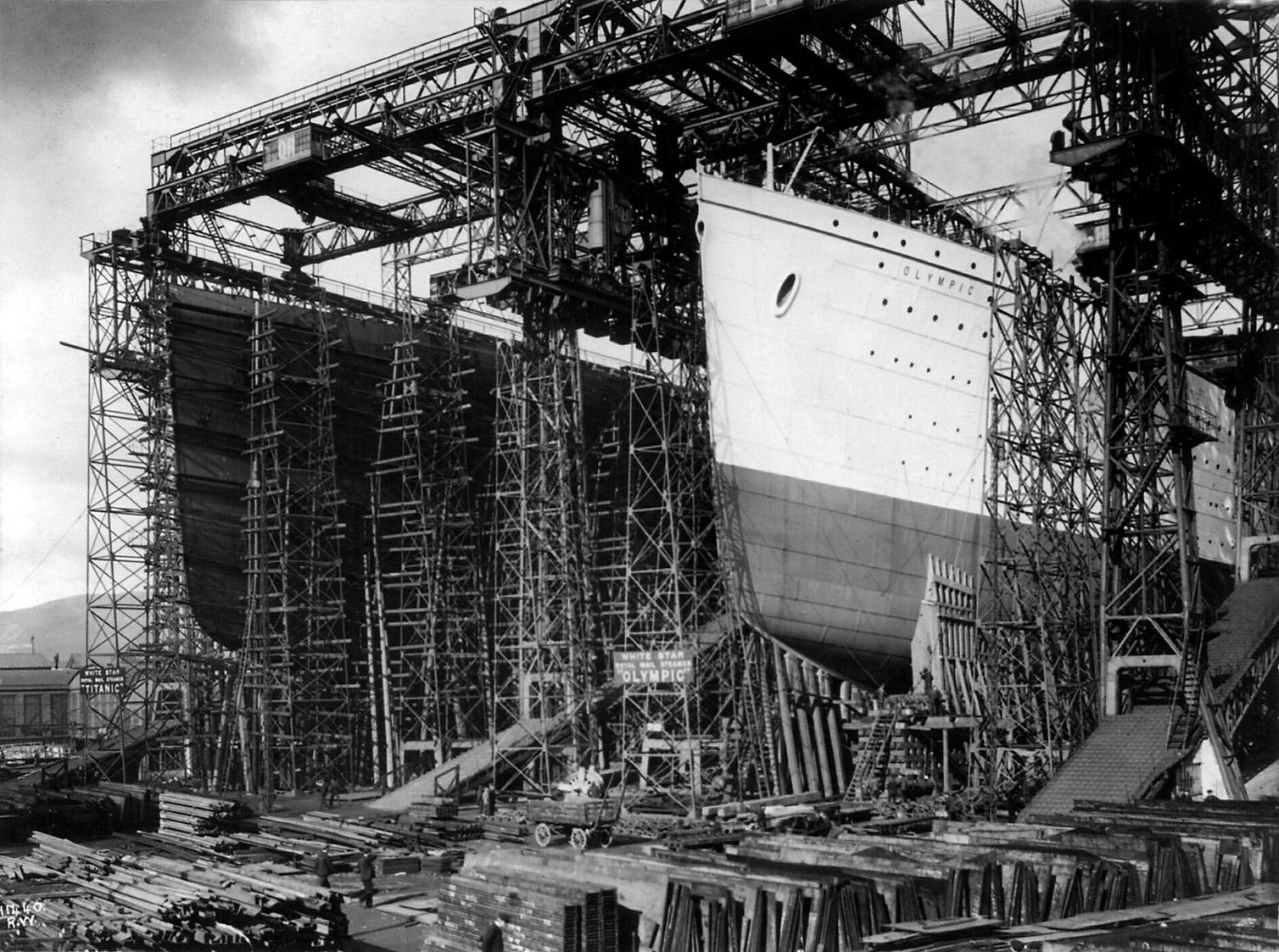
The two ships were brought to life by thousands of workers. Harland & Wolff employed around 15,000 people, known as Islandmen, named after Queen’s Island. Many of them lived in the rows of small brick houses across the river in East Belfast, walking to work at the yard each morning. Fathers, sons and neighbors labored side by side as riveters, platers, carpenters and electricians. Titanic’s hull alone was held together by roughly three million rivets, driven by Belfast workers who took pride in knowing he had helped build the largest ship the world had ever seen.
The Launch
After exploring the hotel, I crossed the street to Titanic Belfast. I arrived before the museum doors opened, so I walked through the freezing morning wind to the spot where Titanic was launched on the bright afternoon of May 31, 1911. More than 100,000 people, roughly one third of Belfast’s population at the time, came out to see the launch of one of the most anticipated ocean liners ever built. In the early twentieth century, ships were traditionally christened at their launch, but White Star Line never christened its ships, so no bottle of champagne was broken across her bow.
Shortly after noon, warning rockets signaled that the moment was near. Workers had coated the ramp with about 22 tons of soap and tallow so the enormous hull could glide into the river. At 12:13, Titanic began to move, and 62 seconds later, the ship that had begun as lines on linen was afloat as the massive crowd erupted in cheers.


Belfast’s Legacy
Even after its sinking, Belfast’s shipbuilders never lost pride in their work. A saying still heard around the city sums it up: “She was all right when she left here.”
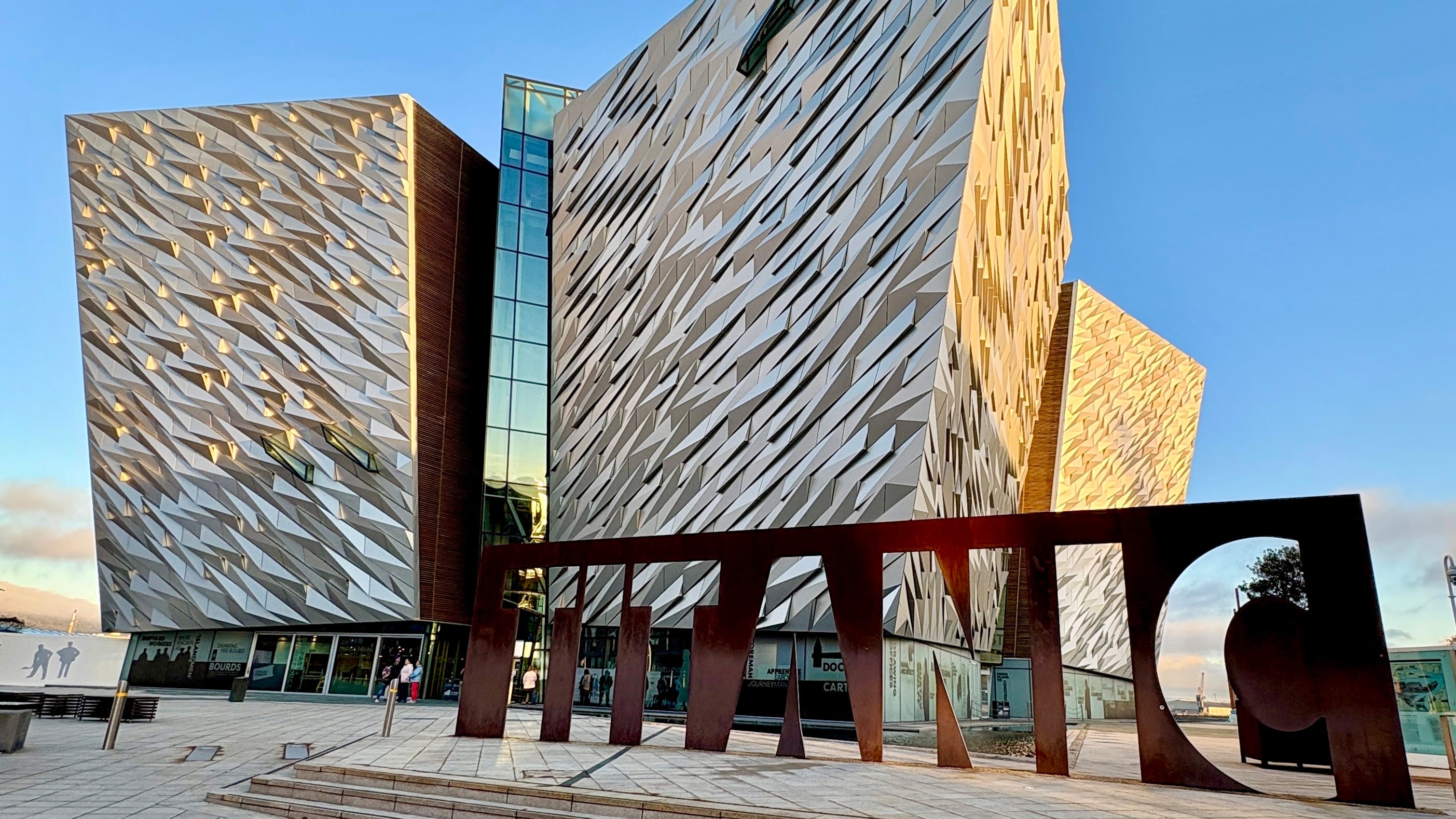
In 2012, a century after Titanic sailed, Belfast marked the anniversary by opening the world’s largest Titanic visitor experience, Titanic Belfast. The building itself is a marvel of modern design and symbolism. Its gleaming aluminum façade was inspired by the bows of the great ships built for White Star Line in Belfast. The building rises to the same height as Titanic’s hull, from keel to bridge—a deliberate architectural echo that connects the museum to the ship it commemorates. It stands beside the site where both Titanic and Olympic were built, honoring not only the ships, but the people who built them.


From the museum’s windows, I looked out over the place where the two sisters had once risen side by side—two great ocean liners built to carry passengers across the Atlantic in unprecedented comfort and luxury. One carried passengers for only five days before she hit an iceberg and sank in one of the most tragic shipwrecks of all time. The other quietly retired and was sold for scrap after 24 years of faithful service, including the transport of troops during the First World War. In fact, Olympic had proven herself so dependable that she earned the nickname “Old Reliable.” Her long career was a lasting testament to the skill of the Belfast workers who had built both sisters.
Part 1 in this series: Southampton: The City that Crewed the Titanic
Next in this series: Halifax: Where the aftermath of Titanic’s sinking unfolded
In my serial novel, When the Sea Was Still, it is Olympic that carries my heroine, Nora Osterly, back across the Atlantic two years after she survives the Titanic. If you’d like to check it out, the story begins here:

More Titanic History from the Wave:
Olympic and Titanic: Discover more about the remarkable sister ships in the historical bonus content accompanying Episode 1.
SS Nomadic: Explore the last surviving White Star Line vessel in the bonus content accompanying Episode 7.