


One year ago today, I was standing in the rain in Southampton, England. I had begun a historical novel, something I never thought I could do, and yet here I was at the first stop on a trip to research the Titanic for my book. Southampton has an especially significant place in Titanic’s history. Not only did it supply 724 of her 885 crew members but on April 10, 1912 the majestic ship set out from its docks on her maiden voyage in a momentous display of optimism and grandeur.
I had traveled more than 5,000 miles to make my novel, When the Sea Was Still, the best it could be. I discovered a transatlantic cruise that retraced Titanic’s intended route from Southampton to New York. With additional Titanic-related stops in Belfast and Halifax, I knew the trip would provide valuable research to help me make my story more authentic. I fell in love with historical fiction after being transported back in time to 15th-century England by Philippa Gregory, and I wanted to carry my own readers into the world of early 20th-century transatlantic travel with the same level of detail.
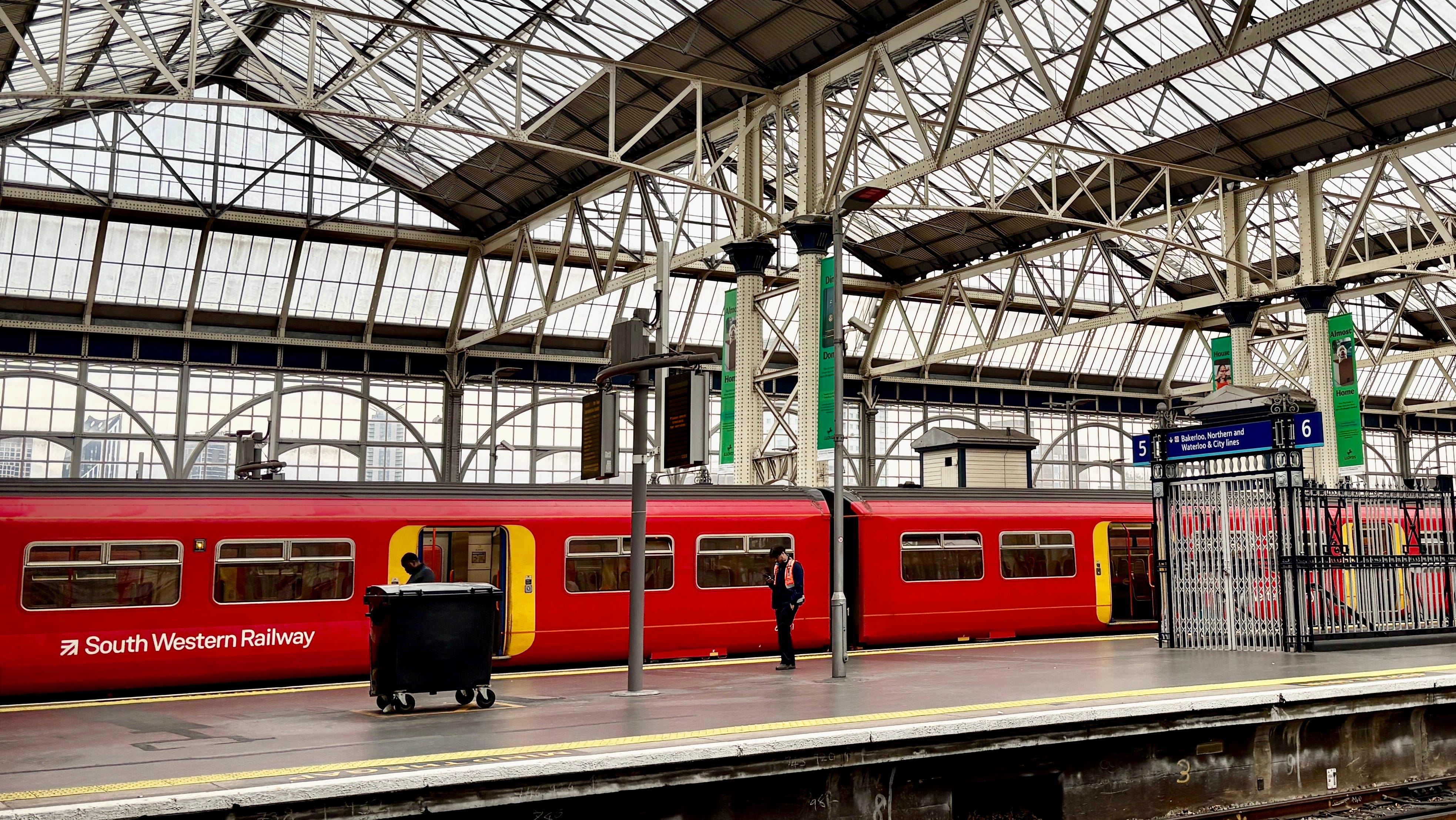
One of the things that I was particularly looking forward to was the train from London’s Waterloo Station to Southampton because I’d learned that it follows nearly the same route Titanic’s passengers took in 1912. Their famous “boat train” continued all the way to the dockside platform, delivering the travelers directly to the ship. My journey, however, ended at Southampton Central Station. As the towns passed by my train window, I tried to imagine which of the old buildings Titanic passengers might also have seen along the way. But most of the tracks were lined with tall trees, blocking the view of what lay beyond.
I still remember the excitement mixed with exhaustion when I finally arrived in Southampton after two flight legs and three train rides. After a quick taxi in the pouring rain and a smooth check-in, I settled into my charming quarters at the White Star Tavern, named for the company that owned the Titanic. The history of the Titanic was alive within the walls of the hotel. Posters of the great ship hung in the lobby, hailing her as “The Queen of the Ocean.” I was fascinated by these relics of hope and pride from a world that could not yet imagine what was to come.


That evening, I was so tired after almost two days without sleep. All I wanted to do was crawl into bed. But I only had one night in Southampton so I mustered up the tiny bit of energy I could still find and crossed the street to a pub I’d really wanted to see. It was called The Grapes and was established in 1855, making it 170 years old when I visited in 2025. It is also where several Titanic crew members stopped for a last drink before setting sail. The pub was nearly empty. Only one other table was occupied by a group watching a soccer match; Manchester I think it was. I was as invested in the Titanic memorabilia hanging on the walls as they were in the match. I read everything there was to read, snapped more photos than I needed, then sat down to enjoy my pizza. Sitting there, it struck me what an intriguing mix of past and present existed within that little pub.


Outside, a plaque tells one of the countless Titanic stories that live on in Southampton. This one is about three crew members, the Slade brothers. They stayed too long at the pub, caught up in enjoying their pints. When they finally left, they only had ten minutes to spare but were further delayed when a passing train stopped them. By the time they arrived at the docks, they were denied boarding, a twist of fate that probably saved their lives.
“I wonder if they watched the Titanic set sail, or if they went back to the pub to drown their sorrows. Either way the Titanic left Southampton that afternoon and sailed to its infamous fate.” ~ Quote from the plaque outside The Grapes Pub
The next morning, the rain poured on but I was determined to try to visit some of the historic Titanic sites. After all, I’d traveled so far to see them. The downpour only seemed to get worse as I made my way toward Canute Chambers, the old White Star Line offices, where families gathered for news after the disaster. I managed to snap a single photo before the wind took hold of my umbrella, turning it inside out, and bending the handle beyond repair. With no working umbrella and sheets of sideways rain soaking me, I surrendered to the weather and returned to my hotel, dripping and temporarily defeated.


That afternoon I took a taxi to the warm and dry SeaCity Museum. Southampton’s Titanic Story exhibit begins with an impressive model of the ship built entirely from LEGO bricks. From there, it focuses on the role the city and its people played in Titanic’s story.

In a particularly moving display, the floor of the museum features a massive map of the city showing every household that lost someone aboard the Titanic. Of the 724 crew from Southampton, 549 of them died in the tragedy. That is less than 1 in 4 who survived. Standing over the map, I was struck by the tight cluster of marks within the streets and blocks of the city. One street had a mark on every other house. The numbers were staggering. According to the museum, 227 widows were left behind and 363 children under the age of 14 lost their fathers. Tears threatened as I could actually feel the losses even though it was so long ago.


I didn’t make it to the docks or the memorials. The rain never let up, and my time in the city was limited. But as a first-time historical fiction author looking to write about one of the world’s most famous tragedies, I felt that I’d gotten what I came for. Just by being physically in the place where the Titanic story still lives today, I’d gotten a sense of the shock and the sorrow that was felt in the city of Southampton. This I knew I could take to the page.
That is what has motivated me to write When the Sea Was Still: to share the stories of resilience born of loss, and to explore why the Titanic sinking still resonates with so many of us today. And it’s why I chose to write a book inspired by one of its actual survivors, Helen Ostby, who lost her father on that tragic night. While my heroine, Nora Osterly, is fictional, she is based on real history. Her story starts two years after the sinking, as she stands on a New York pier, about to board Titanic’s nearly identical sister ship, the Olympic.
Next in this series: Belfast, the City that Built Titanic
If you’d like to see where this research led, When the Sea Was Still begins here:

More Titanic History from the Wave:
Olympic and Titanic: Discover the remarkable sister ships in the historical bonus content accompanying Episode 1.
SS Nomadic: Explore the last surviving White Star Line vessel in the bonus content accompanying Episode 7.
I loved hearing about your research trip and look forward to reading more. I visited a gravesite in Halifax, NS that has some of the Titanic victims whose bodies weren’t sent home or were unidentified. A fascinating time in history.