Belle Époque Paris: What Shopping at Boucheron Was Like in 1908
- amydene22
- May 23
- 4 min read
While researching my historical fiction novel, When the Sea Was Still, I keep stumbling onto pieces of history too good to leave on the cutting room floor. The historian in me wants to pack every detail into the story itself, but that’s not always what the novel needs. So instead of losing them, I’m sharing these discoveries here, in a new blog series.
The first comes from a scene I loved writing: Nora, a young jewelry heiress, walks into the Boucheron jewelry boutique in 1908. It’s her first trip to Paris, and her father has brought her there to introduce her to the world of fine Parisian jewelry. At the time, Paris stood at the height of luxury, artistry, and craftsmanship. When I dug into what a visit to Boucheron actually looked like during the Belle Époque, I found something far richer than I expected. This was not simply a jewelry store. It was a shopping experience unlike anything we encounter today.

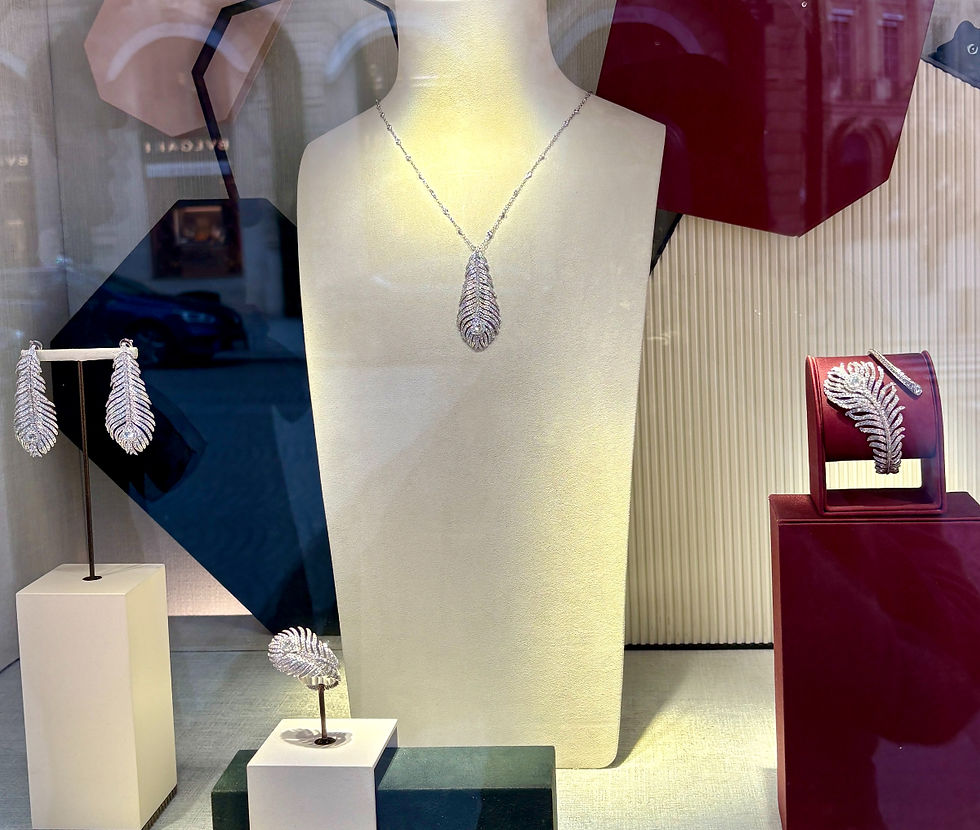
Boucheron was founded in 1858 by Frédéric Boucheron, a jeweler known for combining exceptional craftsmanship with bold artistic design. The son of a cloth merchant, he broke from family tradition and opened his first shop in the arcades of the Palais Royal, then a hub of Parisian luxury. From the start he did things differently—where rival jewelers displayed their pieces lying flat in their cases, Boucheron stood his upright in the window, so passers-by could picture them being worn.
In 1893, after thirty-five years at the Palais Royal, he became the first jeweler to open on the Place Vendôme, helping establish the square as the heart of Parisian fine jewelry. As the story goes, he chose No. 26—the corner spot—because it caught the most sun, and he knew the diamonds in his windows would blaze brighter.
By the time Nora arrives in 1908, Place Vendôme is the undisputed center of the jewelry world. Laid out in the late seventeenth century and defined by its uniform façades and grand symmetry, the square had drawn the most prestigious houses in the trade, including Cartier and Chaumet. To stand there was to stand at the very top—and Boucheron, on its sunlit corner, had gotten there first.

The display windows of Place Vendôme jewelers were a spectacle in their own right, part of the theater of the street before you ever walked in. The corner of No. 26 was no exception. It carried the name Boucheron engraved in gold, and behind the glass the jewels were arranged to be seen. Positioned between the Opéra district and the Tuileries gardens, the boutique sat squarely on the path of fashionable Paris, and the windows were the first act of the performance: a glittering invitation to everyone who passed, and a quiet dare to step inside.
You Weren’t a Customer. You Were a Guest.
The ground floor offered a dazzling display of diamonds and fine jewelry arranged to capture the attention of everyone who stepped in from Place Vendôme. But the real Boucheron experience happened upstairs, in the rooms of the Hôtel de Nocé. Clients were shown into private salons designed to feel like a gracious home rather than a shop—and that was precisely the point.
Frédéric Boucheron had built his reputation on it. He didn’t sell to customers so much as receive guests. You could settle in, enjoy refreshments, and linger as long as you liked, discussing designs in unhurried conversation. He offered guidance rather than pressure. The pace was leisurely, the atmosphere intimate, and the brisk efficiency of an ordinary shop nowhere to be found.
He understood something most jewelers of his era did not: that the relationship mattered as much as the sale. A client received like family didn’t buy once. She returned for a lifetime—and brought her daughters.
Elegance, Expectation, and Performance
One did not simply wander into Boucheron. Elegance was the price of admission.
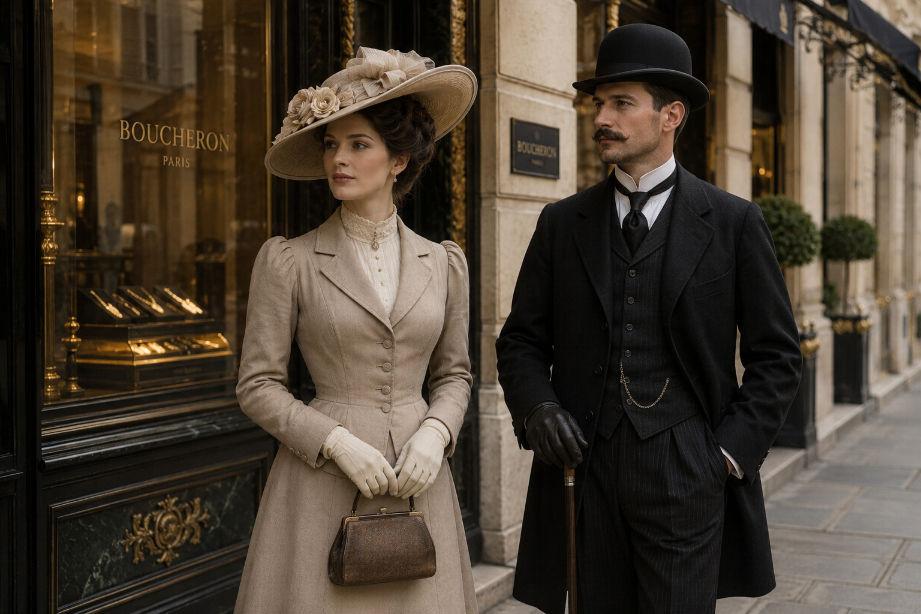
To cross the threshold at No. 26 was to step onto a stage. The clientele were aristocrats, heiresses, and the newly rich of Europe and America. They arrived dressed for the part because being seen at Boucheron was an event. You did not come merely to browse. You came composed and aware that appearances mattered. The boutique’s intimacy welcomed you in, but it also expected you to understand how this world worked.
Women arrived in tailored walking suits or elegant day dresses with fitted bodices, high collars, gloves, and carefully pinned hats adorned with feathers, ribbon, or flowers. Hair was styled neatly beneath wide brims. To enter Boucheron was not simply to shop, but to step into one of the most refined social spaces in Paris.
Men followed a quieter code, dressed in dark tailored suits with crisp collars, polished shoes, gloves, and neatly tied cravats. True sophistication meant never appearing to try too hard.
This was the world Nora stepped into when she arrived in Belle Époque Paris in 1908. A world that would shape not only her understanding of jewelry, but the woman she would eventually become.
Nora’s visit to Boucheron is one small moment in When the Sea Was Still—but it’s the kind of moment that made me fall in love with this era while writing it. The novel arrives this summer. If you’re drawn to historical fiction, the Belle Époque, or stories set against the great ocean liners, I’d love for you to come along.
Follow My Paris Research Journey
This is part of my ongoing Paris research series, where I explore the real places, history, and atmosphere behind When the Sea Was Still.
You can follow along as Nora’s story continues to develop on this blog or on Instagram @traveling_author_amy.


Comments